- Apr 3
I taught piano for years before I realized this was backwards
- Amanda
- 0 comments
Most piano lessons start the same way: students are taught to read notes first, and hope the music makes sense later.
And for a long time, I taught this way too.
My students are strong readers with solid rhythm. They can play. But something was missing. It was still a grind for them to start new songs and pieces.
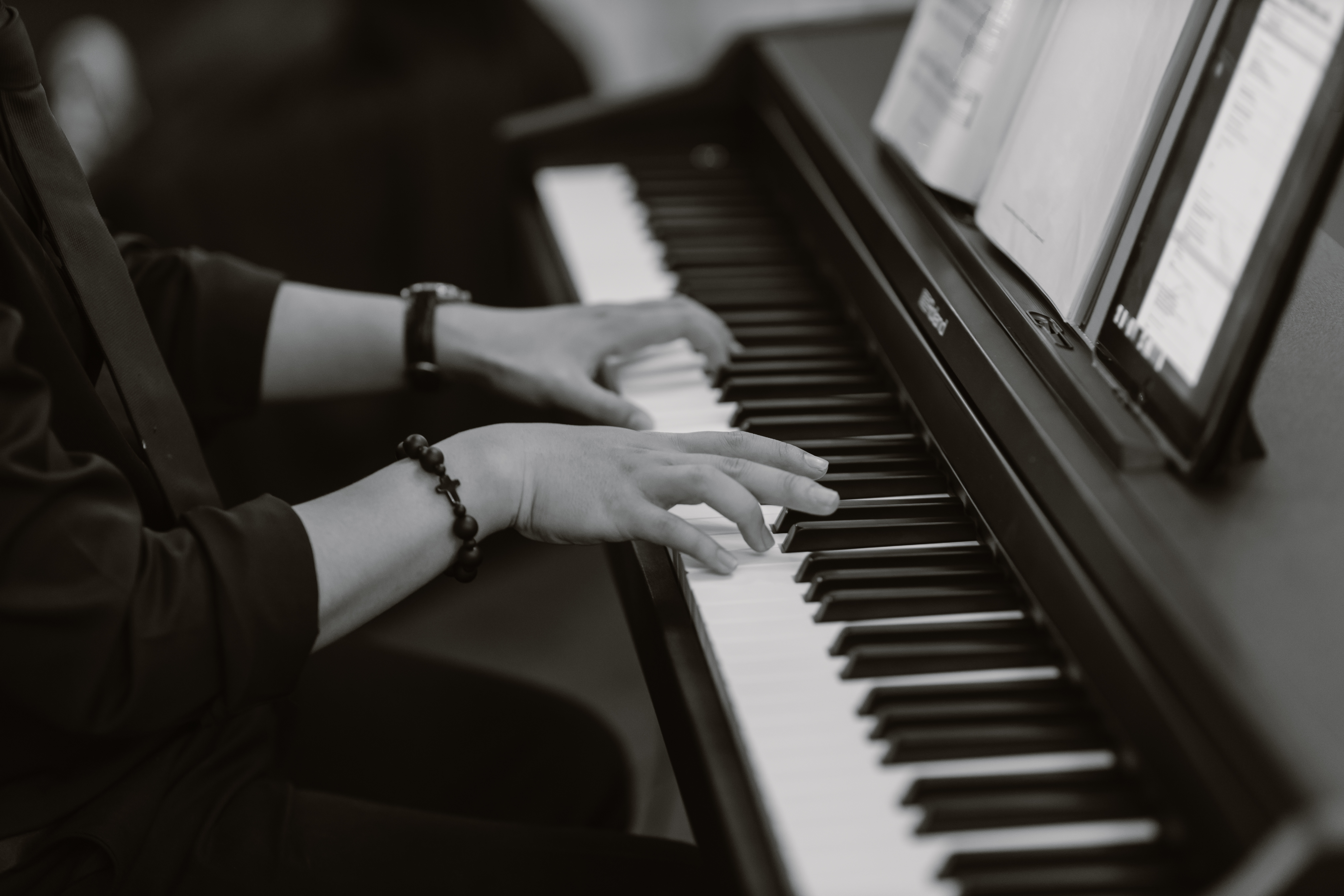
Looking back, I could read music fluently when I was young. I taught myself to read, for the most-part. I listened to music a lot and built a fairly strong sense of musicality.
But as soon as I didn't have a book or sheet music in front of me, I was helpless at a piano. Learning by ear was exhausting. It didn’t make sense. I knew I was capable, so why was it so hard?
I thought I was missing something complicated.
I wasn’t. I was overthinking and ignoring something simple.
Music isn’t notation.
Music is sound. Notation is just a representation of that sound.

Picture this:
A one-year-old saying her first words; her mom stops her and says
"NO! STOP. Don't say anything yet. You must learn to read it first!"
That would be absurd.
Language is sound first. Reading comes later.
Here's a reality though. There are generally two main camps in musical instruction:
1) You must read first, learn to decode and play, and then maybe we'll focus on sound someday (a lot of times, "someday" never comes);
2) Since you can learn and play by ear, you never have to bother learning to read.
Both are flawed and both miss how music actually works.
.
Although I have developed a solid method for teaching my students to read, and really understand music (at least the reading part), I must admit that my approach still was not the most cognitively effective order.
So I changed how I teach.
Now, everything starts with sound and experience.
1: Experience the sound
Students hear the music first.
Noticing direction, movement, tension, and shape.
2: Awareness
What is happening?
Is it going up or down?
Is it stable or pulling somewhere?
What does it feel like?
3: Notation
Now the symbols actually make sense.
We’re not decoding anymore.
We’re recognizing something we already understand.
.
Once a student has a solid basis of what they're playing, we build skill properly:
Learn it small
Break it into manageable pieces. I help them build confidence in what they're playing.
Make it clean
I guide them in using my Lock-in 10 [link to post] practice method to build absolute accuracy and mastery.
Then expand
Only once it’s solid, I have them connect all the sections (for songs/pieces) or add octaves (for technical excercises like scales and chords).
Most students try to grow something before it’s stable.
That’s why things fall apart.
Don’t grow it until it’s clean.
This also changed how I approach practice.
Practice isn’t about time.
It’s about attention.
If a student isn’t aware of what they’re doing, they’re not really practicing
When students:
hear first
understand what’s happening
build things small and clean
Everything becomes easier.
Reading improves.
Technique improves.
Musicianship improves.
Confidence improves.
Because now, they’re not guessing.
They understand what they’re doing.