- Aug 18, 2025
Staff-Reading Simplified: Five Essential Steps to Mastering the Musical Staff
- Amanda
- Music Learning Foundations
- 0 comments
Have you ever looked at a sheet of music and thought, “Where do I even start?”
You’re not alone! The musical staff can seem very intimidating at first, but with the right tools, it’s much simpler than you think. In this post, I’ll show you a simple, logical way to decode the staff—and even connect it to the piano keyboard—so you can start reading music with confidence.
It may seem confusing at first glance but it’s actually quite simple once you know its secrets. Whether you're a beginner just starting your musical journey or someone looking to refresh your skills, this guide will help you see the staff as a map, not a mystery.
By the end of this article, you'll not only understand how the staff works, but you'll also discover a logical pattern that makes reading music logical and stress-free. Plus, I'll show you how the staff connects to the piano keyboard, so you can see the bigger picture and start playing with confidence.
I often hear people say they don’t think they can ever learn how to read music, so they don’t even try. It’s a shame because while learning to read music takes time, it’s not as hard as you might think—and it’s absolutely worth the effort.
Once you unlock this skill, you’ll open the door to an entire world of music you never thought possible. Imagine being able to pick up a piece of music and play it, exploring new songs and styles with confidence. That’s what I want to help you achieve.
What Is the Musical Staff?
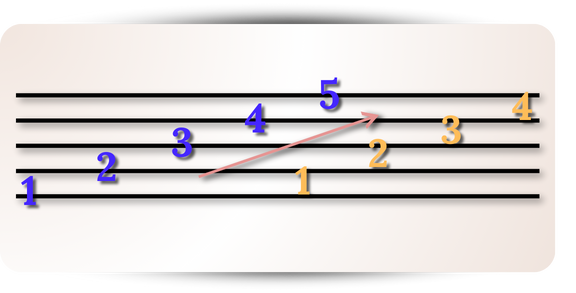
The musical staff is a structure that organizes musical notation into a clear, logical system. It consists of five lines and four spaces, each representing a specific note. Together, these lines and spaces create a visual map that corresponds to the notes you’ll play on an instrument like the piano.
We need both lines and spaces because our eyes rely on visual contrast to differentiate where each note is placed. Without this alternating pattern, it would be much harder to identify the notes quickly and accurately.
To make sense of this structure, we use symbols called clefs. The clefs point out specific keys on the keyboard, sort of like landmarks. These will give us perspective to help relate other notes to the landmarks.
Why Mnemonic Devices Aren’t the Best Tool
Many people are taught to read the musical staff using mnemonic devices like “Every Good Boy Does Fine” or “FACE.” While these might seem helpful at first, they often make reading music much more complicated than it needs to be.
The problem with mnemonic devices is that they add extra steps. Instead of recognizing a note right away, you have to stop and think, “Okay, what’s the phrase again? Which word matches this line or space?” And then you also have to remember which mnemonic applies to the Treble Clef, which one is for the Bass Clef, and whether it’s for the lines or spaces.
That’s a lot to keep straight.
On top of that, mnemonics only really work when you’re reading notes going up the staff. If you need to read notes going down, you have to flip the whole phrase in your head, which can get really confusing.
This is why I don’t teach mnemonics. Instead, I use the skipping pattern. It’s logical, consistent, and works whether you’re reading up or down the staff. It skips all the extra mental gymnastics and helps you see the notes as part of a simple, repeating system.
Once you learn and practice this system, reading music becomes much easier and more intuitive.
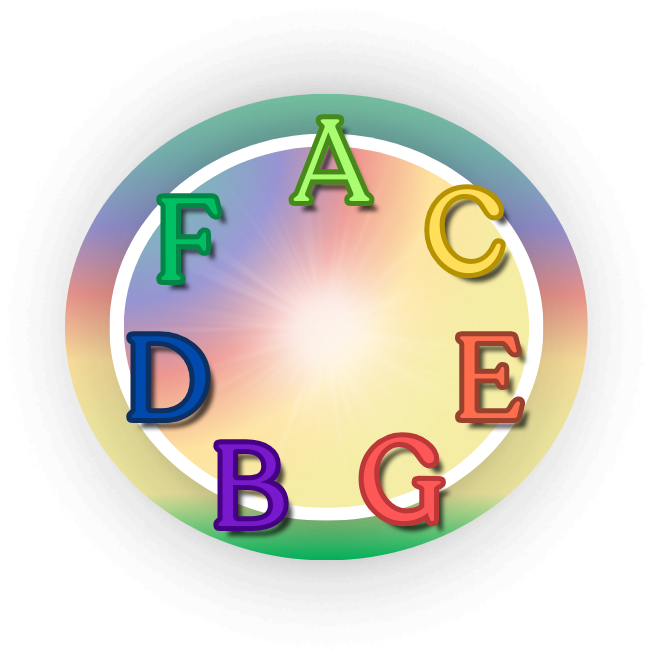
The Skipping Pattern: A C E G B D F
The skipping pattern is a simple, logical tool that makes reading the musical staff much easier. Instead of memorizing mnemonics or relying on guesswork, the skipping pattern shows you how notes are arranged in a natural, repeating sequence. This pattern works for both the Treble and Bass Clefs and applies equally when reading notes up or down the staff.
The idea is straightforward: the musical staff alternates between lines and spaces, and the notes follow a skipping sequence. For example:
On the Treble lines, the pattern is: E, G, B, D, F
On the Bass lines, the pattern is: G, B, D, F, A
On the Treble spaces, the pattern is: F, A, C, E
On the Bass spaces, the pattern is: A, C, E, G
The pattern doesn’t change, no matter where you start or which direction you’re reading. This consistency makes it easy to recognize notes quickly and confidently.
To make things even simpler, we use guide notes—landmarks like Middle C, Treble G, and Bass F—to anchor the pattern.
Once you know where these guide notes are, you can relate all the other notes to them using the skipping pattern. Think of it like a map where the landmarks help you find your way.
Valuable Practice Tip: A great way to program this pattern into your mind is to practice saying a couple of cycles of it aloud every day.
For example, start with: A, C, E, G, B, D, F - A, C, E, G, B, D, F
Then, practice it backward: F, D, B, G, E, C, A - F, D, B, G, E, C, A
Practice reciting this out loud, forward and backward five times a day.
It is important to also practice the skipping pattern in reverse because it strengthens your ability to visualize and grasp the abstract relationships between notes.
This will make reading descending notes just as intuitive as ascending ones. In just a couple of weeks, you’ll find that the pattern feels second nature.
Side Note: Learning the skipping pattern will also help you understand chords much more easily. Chords are built using notes that follow the skipping pattern (like the notes of C major triad: C, E, G).
By mastering this pattern, you’ll not only improve your ability to read individual notes but also set yourself up for success when learning harmony.
When you’ve practiced this pattern regularly, you’ll start to see the staff as a logical system rather than a random set of lines and spaces. It’s an approach that works, whether you’re just starting out or looking to improve your reading skills.
Ready to put the skipping pattern into practice? Take a few minutes each day to recite the pattern forward and backward, and you’ll find it becomes second nature in no time. To make it even easier, get my free kit, Staff-Reading Simplified. It’s a helpful visual guide to reinforce the skipping pattern and key landmarks as you practice.
Connecting the Staff to the Piano Keyboard
The musical staff isn’t just a collection of lines and spaces: it’s a map which directly corresponds to the piano keyboard. Each note you see on the staff aligns with a specific key on the piano, making it possible to translate written music into sound.
One of the most important reference points on the staff is Middle C.
Middle C is located directly in the middle of the Grand Staff and serves as the primary landmark. On the staff, Middle C is written on its own small ledger line, just below the Treble staff or just above the Bass staff.
On the piano, Middle C is the C key nearest the center of the keyboard.
From Middle C, two other important guide notes are Treble G and Bass F.
Treble G is a handspan (five white keys) up from Middle C, usually played by the right hand.
Similarly, Bass F is a handspan down from Middle C, usually played by the left hand.
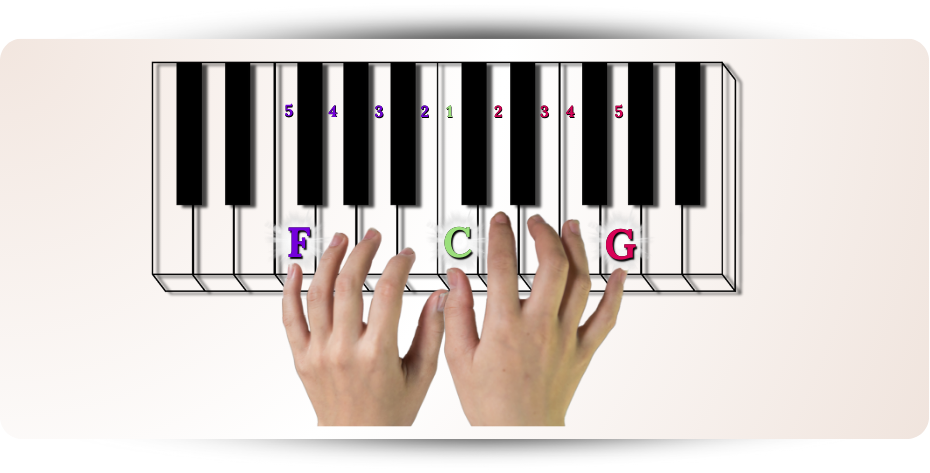
These guide notes are easy to find both on the staff and on the keyboard, and they act as anchors to help you locate other notes.
This connection makes it easier to understand how written music relates to the keyboard. Once you know the guide notes, you can use the skipping pattern to quickly find other notes around them.
Tip for Beginners: Practice finding Middle C, Treble G, and Bass F on both the staff and the piano. Once you’re comfortable with these guide notes, work outward to learn the remaining notes. By anchoring your understanding with these landmarks, you’ll start to see the staff and keyboard as one integrated system.
Expanding from the Guide Notes
Once you’re comfortable locating the guide notes on the keyboard, reading the rest of the staff becomes straightforward.
Using the skipping pattern, you can map out all the notes on the staff logically and systematically.
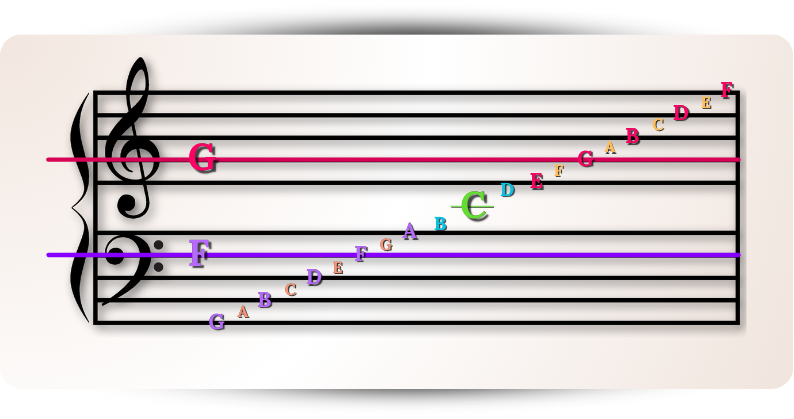
On the Treble staff, the second line is G, as highlighted by the Treble Clef. Following the skipping pattern, moving down to the first line gives you E. Moving upward, line three is B, line four is D, and the top line is F.
On the Bass staff, the fourth line is F, as highlighted by the Bass Clef. Moving downward, line three becomes D, line two is B, and line one is G. Skipping upward from the fourth line, the top line would be A.
The skipping pattern makes the logic clear and easy to follow. Once you’ve mapped out the notes for yourself, it becomes simple to practice reading them while also understanding the relationships between the lines and the clefs.
Ledger Notes and the Skipping Pattern
As you progress in reading music, you’ll encounter notes that extend beyond the lines and spaces of the staff. These are called ledger notes.
While they might seem intimidating at first, they follow the same skipping pattern as the notes within the staff, so there’s no need to learn anything new.
Here’s how it works:
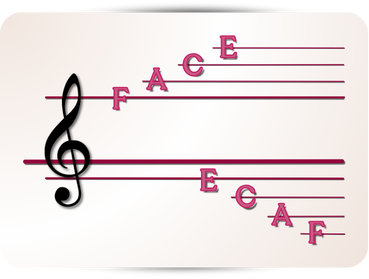
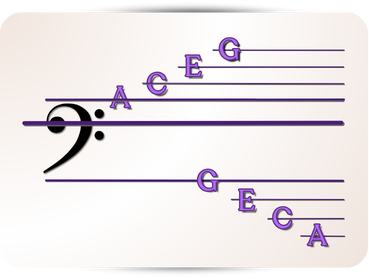
Above the Treble Staff: Starting from the top line, F, you simply continue the skipping pattern upward: F, A, C, E, G, and so on.
Below the Bass Staff: Starting from the bottom line, G, you continue the skipping pattern downward: G, E, C, A, F, and so on.
This makes reading ledger notes straightforward because the same skipping pattern you’ve already practiced applies seamlessly beyond the staff.
What’s Next? Intuitive Ways to Read the Staff
Now that you have a solid foundation in understanding the musical staff, there’s so much more to explore. In future posts, I’ll dive into intuitive methods to make reading music even easier and faster, including:
Intervals: Learn to recognize the distance between notes at a glance. This skill allows you to read pairs of notes, melodies, and harmonies more efficiently.
Chords: Discover how reading by chords can help you become a much more fluent music reader.
Scales/Key Signatures: Explore how to analyze a piece of music so you can easily predict which chords will be included, helping you read intuitively.
These techniques build on what you’ve learned here, taking your music-reading skills to the next level. By combining the skipping pattern with these advanced tools, you’ll unlock the ability to read music fluently and confidently.
Make sure to subscribe to my email list so you don’t miss these upcoming posts, as well as other helpful tips and resources!
Conclusion: Putting it all Together
Reading music might seem complicated at first, but with the right tools and a clear approach, it’s easier than you think. By understanding the musical staff as a logical system, using the skipping pattern, and focusing on guide notes, you can confidently navigate even the most unfamiliar pieces of music.
The skipping pattern provides a simple, consistent way to understand how notes are arranged on the staff. Whether you’re reading notes up, down, or even beyond the staff with ledger notes, the pattern stays the same. Combine this with key guide notes—Middle C, Treble G, and Bass F—and you have reliable landmarks to orient yourself on both the staff and the keyboard.
And this is just the beginning! In future posts, I’ll dive into more intuitive ways to read the staff, including how recognizing intervals and reading by chords can make reading music even more enjoyable. These methods will take your music-reading skills to the next level, helping you play with greater confidence.
To help you get started today, I’ve created a free info package called Staff-Reading Simplified; Five essential steps to mastering the musical staff, which highlights the skipping pattern and key landmarks. It’s the perfect companion to your practice, helping you quickly and confidently identify notes on the staff and keyboard.
Remember, learning a new skill takes time, and progress often comes in small, steady steps. By practicing consistently and using these strategies, you’re well on your way to reading music fluently and unlocking the ability to play the music you love.